Originally published in the Specialist magazine, November, 2008.
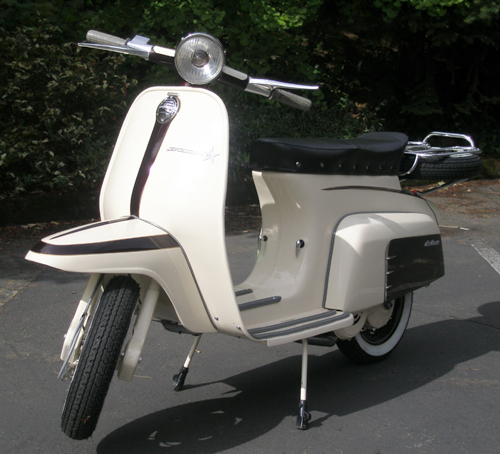
The diminutive J-Range Lambretta has been the brunt of bad jokes for years. And for good reason--they're small, slow, funny looking, share very few common parts with other Lambrettas, have almost no pre-fab upgrades available and instead of a tube steel frame they're made with a monocoque (unibody) chassis like, dare I say it, a Vespa. Oh the horrors! To prove their undesireability, Innocenti made them for only six years, 1964-70, before abandoning the style altogether in favor of the Luna line of Lambretta small frame scooters.
So why would anybody want a J-Range scooter? I wanted one because they are so unique. About eight years ago I didn't have a Lambretta and didn't know much about them. I liked Vespa small frames and I liked Lambrettas and thought it would be cool to have a small frame Lambretta, not even knowing if such a thing existed.
Then, one day I spied a J50. It was an odd looking little bike and had obviously been neglected and abused. "Well there ya go," I thought to myself, "there is such a thing as a small frame Lambretta!" A few months later that little J50 popped up for sale on Craig's List and I nabbed it. I got it running for less than $100 in parts and a little help from Paul, one of the local Lambretta luminaries.
One of the first things I learned about the J50 is that it's S L O W. Lordy is it slow! I could get up to 30 MPH... eventually--maybe 35 down hill or with a strong tailwind. But that was fine with me. I had one of the most unique scooters in town!
A few months later a Starstream came up for sale locally and I bought it. Like the J50, it took very little to get it on the road. While the Starstream wasn't a rocket it was a far bit faster than the J50 and I was thrilled. It was pretty tatty looking but it ran well. Stage-3 porting and a bigger carburetor got it moving better. It had a top speed of 58 MPH, a cruising speed of 50 MPH and it got there in about the same amount of time as a stock Li150. Granted, it would have been quicker with somebody lighter than me on it, but you know how that goes!
I rocked that scooter, rust, dents, bent frame and all, for a couple of years before tearing it down to restore it. It was even stolen and returned to me unscathed a month later during that time. If you went to the 2008Lambretta Jamboree then you may have seen my Starstream--it was the only J-Range at the rally.
I have noticed a lot of requests for J-Range Lammys on the LCUSA forum since then. Most folks are looking for a Starstream, probably because they're the fastest of the line. Many of those people settle for a Cento. I bought a barn-find Starstream for my wife awhile back. Due to financial reasons we decided to sell it rather than keep and restore it. I listed it on the LCUSA forum and it sold in less than a day.
So why the popularity of J-Range Lambrettas? Well, my original reason for wanting one still holds true--they're unique. They're attractive in their own quirky way and their small size, shorter wheelbase and light weight (about 80 pounds lighter than a Series 3 bike) make then nimble and easy to ride. While I'm six-feet tall and weight 190 pounds, shorter folks really like the J-Range scooter's size and handling.
Another reason J-Range Lambrettas are becoming popular is their relatively low price. They have remained inexpensive because they were looked down upon for so long. I bought my Starstream for $700 and invested just $100 more to get it running. A similar condition Series 3 Li150 would more than twice that amount. But the rising popularity of the J-Range has been bringing prices up. An original condition Starstream with only 172 miles on the odometer sold on Ebay for $2,800. In actuality, there's no reason why a Cento, J125 or Starstream shouldn't cost as much as an Li. Indeed, if rarity truly contributes to price then a J-Range should cost more than an Li!
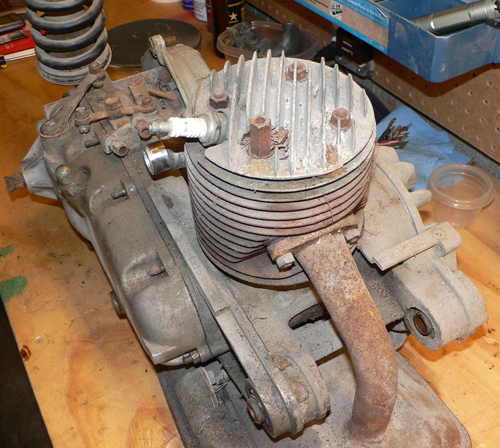
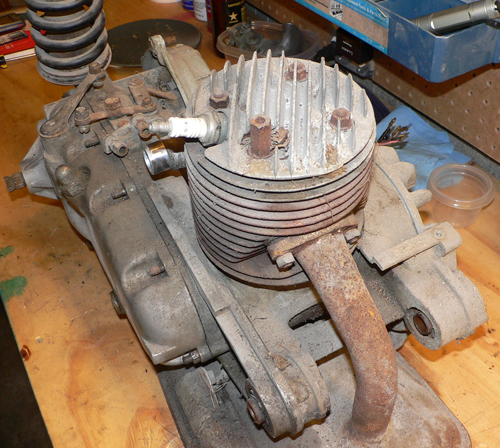
Finding parts is more of a challenge than with Series 1, 2 & 3 Lambrettas. Many items are readily available and a few bits are being remade. Other things though, like engine cylinders and heads, crankshafts, and many other internal engine components, are more difficult to come by. We have to find them as we can, typically from parted-out and salvaged bikes. I had to source a few NOS bits from England when restoring my Starstream and I can tell you that wasn't cheap! Many engine components are also not interchangeable between the J-Range models, making parts availability even more constrained.
Many shops do carry a handful of J-Range bits, so if you are in the market don't hesitate to call your favorite dealer, including those overseas (notably England). Parts are also available on Ebay and through LCUSA members. If you don't use the LCUSA web site forum much, give it a try the next time you're searching for parts or technical advice. There's an encyclopedia's worth of knowledge and experience waiting there! The same goes for the Lambretta Club Great Britain's web site and forum. And for a nice history of the J-Range, visit the LCGB's site at http://ilambretta.com/.
There are over a hundred classic and vintage Vespas here in Portland, Oregon and a few dozen large frame Lambrettas. But as far as I know there are only three J-Range Lambrettas. But the J-Range renaissance is on! Who knows how many will be around next year?!
The Lambretta J-Range line is comprised of:
* J50--50cc, 3-speed, 1964-66, Total production 31,021
* J50--50cc, 4-speed, 1966-68, Total production 38,967
* J50 Deluxe--50cc, 3-speed plus some added fancy bits, 1968-1970, Total production 28,852
* Cento--100cc, 3-speed, 1964-65, Total production 17,642
* J125--125cc, 3-speed, 1964-66, Total production 21,651
* Starstream--125cc, 4-speed, 1966-1969, See below for total production
* Super Starstream--125cc, 4-speed plus some added fancy bits and a turning front mudguard, 1966-1969, Combined Starstream and Super Starstream total production 16,052
J-Range Mechanical Facts:
* Vertical piston on all models
* Monocoque (unibody) chassis with cables and wiring run inside floor channel
* Fuel tank separate from engine compartment
* Carburetor on right side of engine
* 6-volt points ignition on all models, no battery
* The J50 originally came with 2.75x9-inch tires and produced only 1.47 horsepower
* All subsequent models came with 3x10-inch tires but 3.5-inch width tires can be fitted without any conversions or adjustment
* Credit for stated stock maximum power output in the J-Range belongs to the Starstream with 5.8 horsepower at 5,300 RPM
Then, one day I spied a J50. It was an odd looking little bike and had obviously been neglected and abused. "Well there ya go," I thought to myself, "there is such a thing as a small frame Lambretta!" A few months later that little J50 popped up for sale on Craig's List and I nabbed it. I got it running for less than $100 in parts and a little help from Paul, one of the local Lambretta luminaries.
One of the first things I learned about the J50 is that it's S L O W. Lordy is it slow! I could get up to 30 MPH... eventually--maybe 35 down hill or with a strong tailwind. But that was fine with me. I had one of the most unique scooters in town!
A few months later a Starstream came up for sale locally and I bought it. Like the J50, it took very little to get it on the road. While the Starstream wasn't a rocket it was a far bit faster than the J50 and I was thrilled. It was pretty tatty looking but it ran well. Stage-3 porting and a bigger carburetor got it moving better. It had a top speed of 58 MPH, a cruising speed of 50 MPH and it got there in about the same amount of time as a stock Li150. Granted, it would have been quicker with somebody lighter than me on it, but you know how that goes!
I rocked that scooter, rust, dents, bent frame and all, for a couple of years before tearing it down to restore it. It was even stolen and returned to me unscathed a month later during that time. If you went to the 2008Lambretta Jamboree then you may have seen my Starstream--it was the only J-Range at the rally.
I have noticed a lot of requests for J-Range Lammys on the LCUSA forum since then. Most folks are looking for a Starstream, probably because they're the fastest of the line. Many of those people settle for a Cento. I bought a barn-find Starstream for my wife awhile back. Due to financial reasons we decided to sell it rather than keep and restore it. I listed it on the LCUSA forum and it sold in less than a day.
So why the popularity of J-Range Lambrettas? Well, my original reason for wanting one still holds true--they're unique. They're attractive in their own quirky way and their small size, shorter wheelbase and light weight (about 80 pounds lighter than a Series 3 bike) make then nimble and easy to ride. While I'm six-feet tall and weight 190 pounds, shorter folks really like the J-Range scooter's size and handling.
Another reason J-Range Lambrettas are becoming popular is their relatively low price. They have remained inexpensive because they were looked down upon for so long. I bought my Starstream for $700 and invested just $100 more to get it running. A similar condition Series 3 Li150 would more than twice that amount. But the rising popularity of the J-Range has been bringing prices up. An original condition Starstream with only 172 miles on the odometer sold on Ebay for $2,800. In actuality, there's no reason why a Cento, J125 or Starstream shouldn't cost as much as an Li. Indeed, if rarity truly contributes to price then a J-Range should cost more than an Li!
Finding parts is more of a challenge than with Series 1, 2 & 3 Lambrettas. Many items are readily available and a few bits are being remade. Other things though, like engine cylinders and heads, crankshafts, and many other internal engine components, are more difficult to come by. We have to find them as we can, typically from parted-out and salvaged bikes. I had to source a few NOS bits from England when restoring my Starstream and I can tell you that wasn't cheap! Many engine components are also not interchangeable between the J-Range models, making parts availability even more constrained.
Many shops do carry a handful of J-Range bits, so if you are in the market don't hesitate to call your favorite dealer, including those overseas (notably England). Parts are also available on Ebay and through LCUSA members. If you don't use the LCUSA web site forum much, give it a try the next time you're searching for parts or technical advice. There's an encyclopedia's worth of knowledge and experience waiting there! The same goes for the Lambretta Club Great Britain's web site and forum. And for a nice history of the J-Range, visit the LCGB's site at http://ilambretta.com/.
There are over a hundred classic and vintage Vespas here in Portland, Oregon and a few dozen large frame Lambrettas. But as far as I know there are only three J-Range Lambrettas. But the J-Range renaissance is on! Who knows how many will be around next year?!
The Lambretta J-Range line is comprised of:
* J50--50cc, 3-speed, 1964-66, Total production 31,021
* J50--50cc, 4-speed, 1966-68, Total production 38,967
* J50 Deluxe--50cc, 3-speed plus some added fancy bits, 1968-1970, Total production 28,852
* Cento--100cc, 3-speed, 1964-65, Total production 17,642
* J125--125cc, 3-speed, 1964-66, Total production 21,651
* Starstream--125cc, 4-speed, 1966-1969, See below for total production
* Super Starstream--125cc, 4-speed plus some added fancy bits and a turning front mudguard, 1966-1969, Combined Starstream and Super Starstream total production 16,052
J-Range Mechanical Facts:
* Vertical piston on all models
* Monocoque (unibody) chassis with cables and wiring run inside floor channel
* Fuel tank separate from engine compartment
* Carburetor on right side of engine
* 6-volt points ignition on all models, no battery
* The J50 originally came with 2.75x9-inch tires and produced only 1.47 horsepower
* All subsequent models came with 3x10-inch tires but 3.5-inch width tires can be fitted without any conversions or adjustment
* Credit for stated stock maximum power output in the J-Range belongs to the Starstream with 5.8 horsepower at 5,300 RPM