
A friend of mine has a '59 Allstate with a toasted motor, and just so happened to have another good rebuilt motor on the shelf. Lucky him! So I'm doing the motor swap. This one is pretty straight forward, since the two motors are identical. However, it would not be too different if you were going to drop in a brand new Indian crate motor to your ride. So let's let the fun begin...
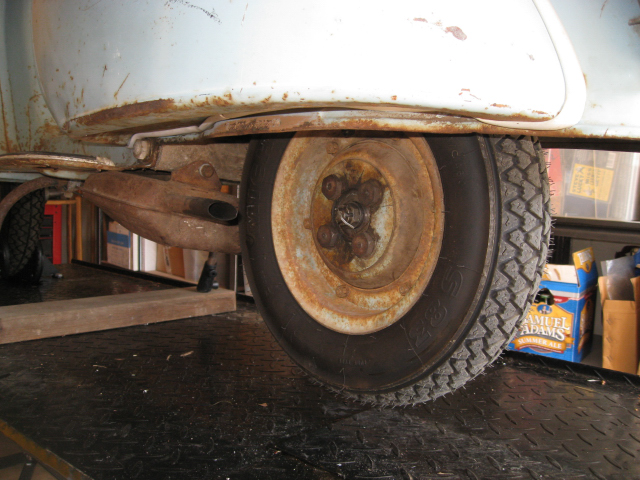
First, I got the scoot up on the lift, and just inspected everything. If you don't have a lift, you'll want to get something up under the rear of the frame and the centerstand so the motor is up off the ground.
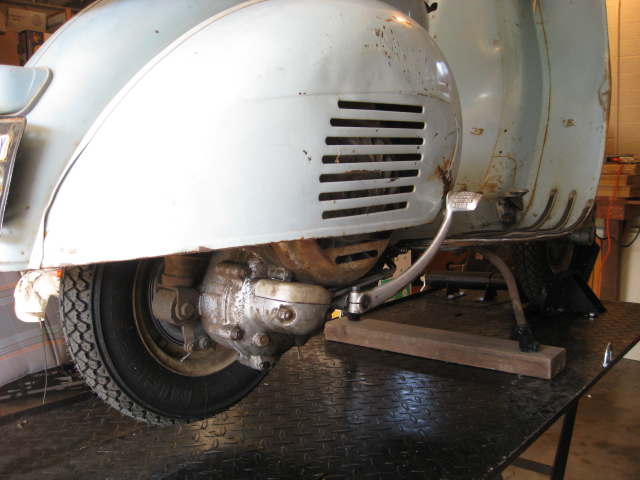
Here's a view of the other side. Since this isn't my scooter, I'm just checking it over to make sure there isn't anything strange going on before I dive in. This scooter is totally stock, so no worries.
This is one of those jobs that is easier with two people, but is certainly doable with just one. I didn't have an assistant, so I'll show you how I did it by myself.
More motor swap fun below the jump...
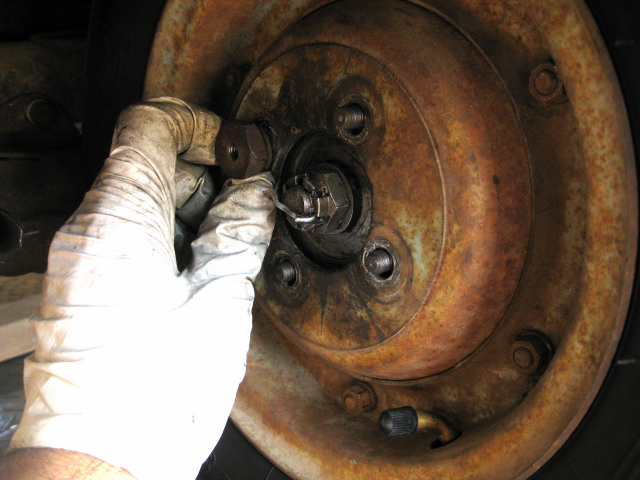
First, I removed the rear wheel so I could gain access to both sides of the motor, and also to allow the motor to swing down farther later on. The wheel is just held on by the four large nuts.
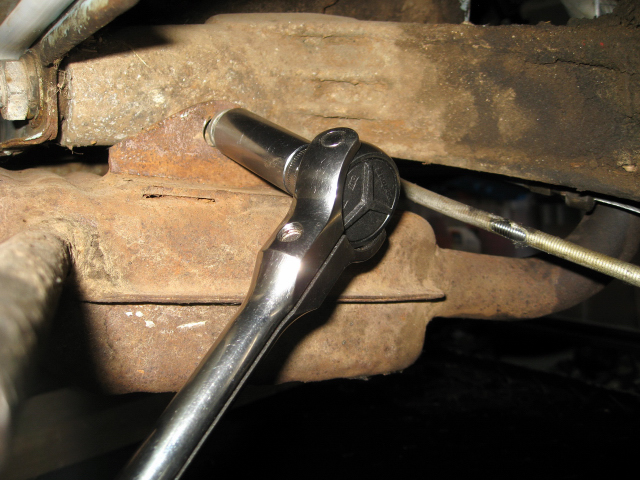
Next, I removed the exhaust. It hangs forward on the swing arm, and if you don't pull it off, the motor is blocked from swinging down. The exhaust is held on by one bolt on the swingarm (pictured above), and another bolt located at the top of the exhaust header pipe that attaches to the cylinder.
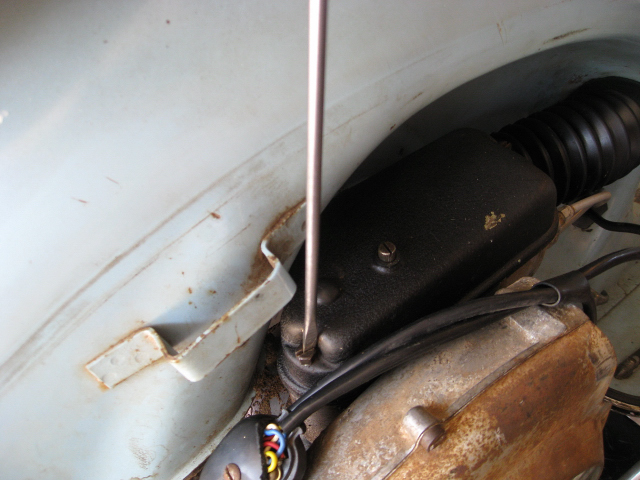
Next, we need to remove the carb and airbox. If you have two people working on this job, removing the airbox isn't necessary, but with just one person, it makes it a lot easier. In any case, you'll need to access the carb so you can pull off the cables and fuel line. Start by removing the two bolts, and pulling off the top of the airbox.
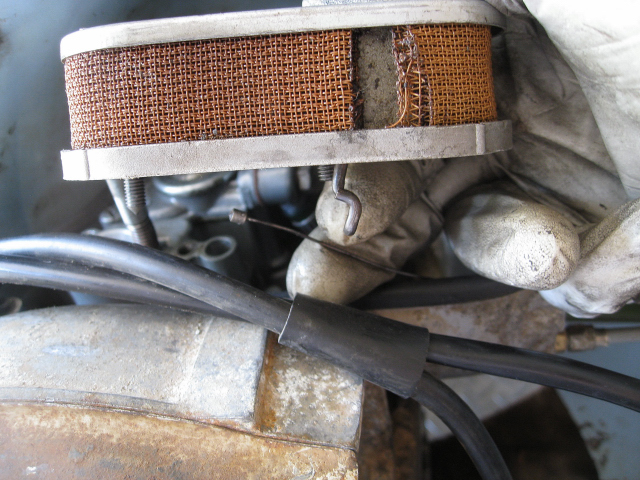
Next, you need to remove the air filter element, which is held on by two special bolts, visible on the top of the filter. There were several cold-start choke systems used by Piaggio on these early rotary valve motors. This scooter used an air choke, which simply pulled a flap down over the carburetor venturi. The flap is activated by cable, and his housed in the air filter. I took this picture to show how the mechanism mates up. You'll need to remove the choke cable from the airbox.
To be continued in Part 2!!